INTRO
In the past, I used Hasselblad V cameras on shooting sets with multiple magazines, some with 120/220 color film, others with 120 B&W, another for Polaroid shots to test the color temperature or direction of lighting, and lastly, many special event jobs required using 70mm magazines. I like the convenience of switching different magazines, viewfinders, screens, etc., and I appreciate Hasselblad’s modular system as this deep dive into what I shoot continues to confirm this liking.
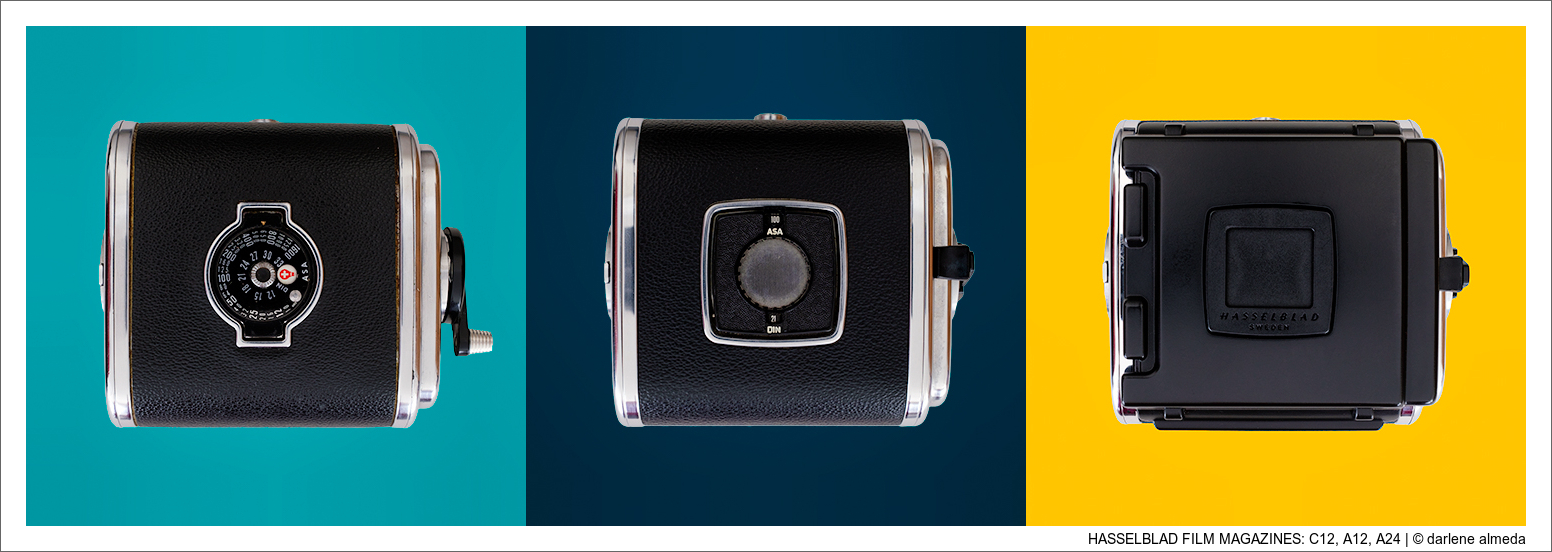
There are a few different-looking magazines for the V system, some that look different but function the same, and some that look different but do indeed operate a bit differently. I photographed three magazine backs for the above graphic to show some differences. Once you become familiar with the V system film magazines (backs), you can quickly distinguish what makes them different operationally.
C 12 MAGAZINE
The first photo in the graphic shows what is known as a “C” magazine. Hasselblad originally called it “Magazine 12” based on an early datasheet named “220 film.” It may have later earned the “C” designation for “classic” from photographers to distinguish it from the later “A” “automatic” film magazines.
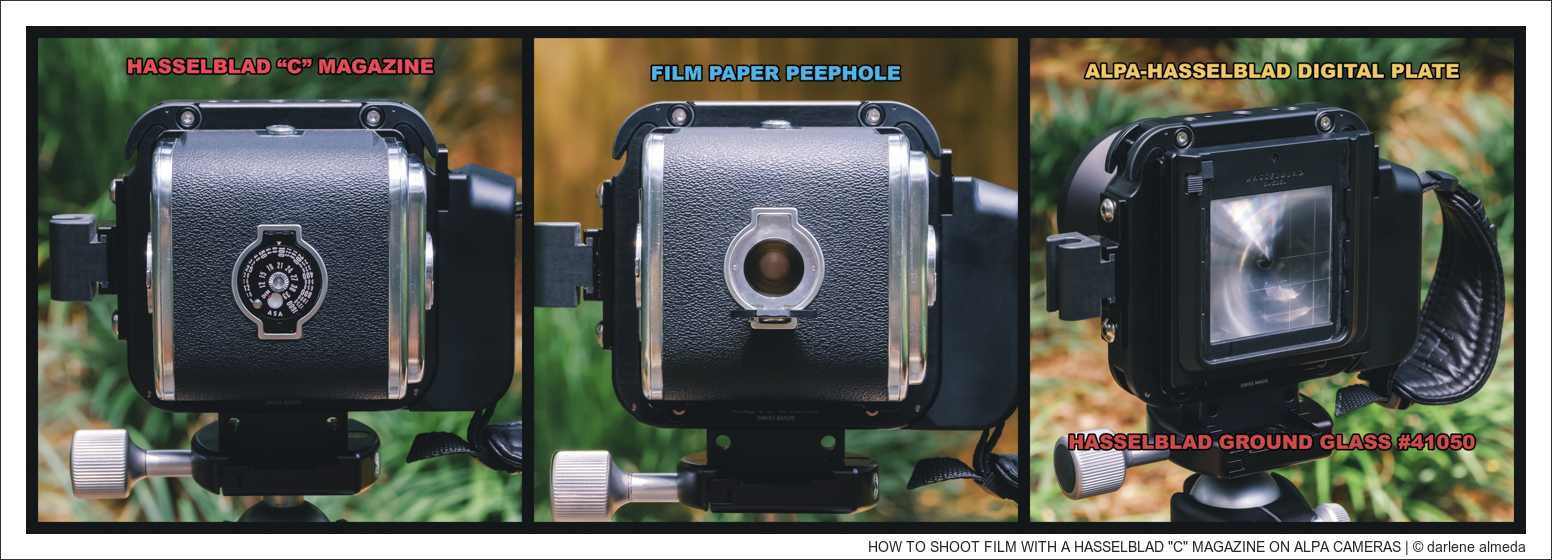
You should understand why these particular non-automatic film magazines are popular today. For photographers like myself who enjoy shooting medium format film and digital, the “C” magazine can be used on a camera that takes a Hasselblad V digital back plate. Manual film advancement is required because these cameras lack the film advance mechanism built into a Hasselblad camera. The manual film advancement feature makes the “C” backs usable on some non-Hasselblad cameras.
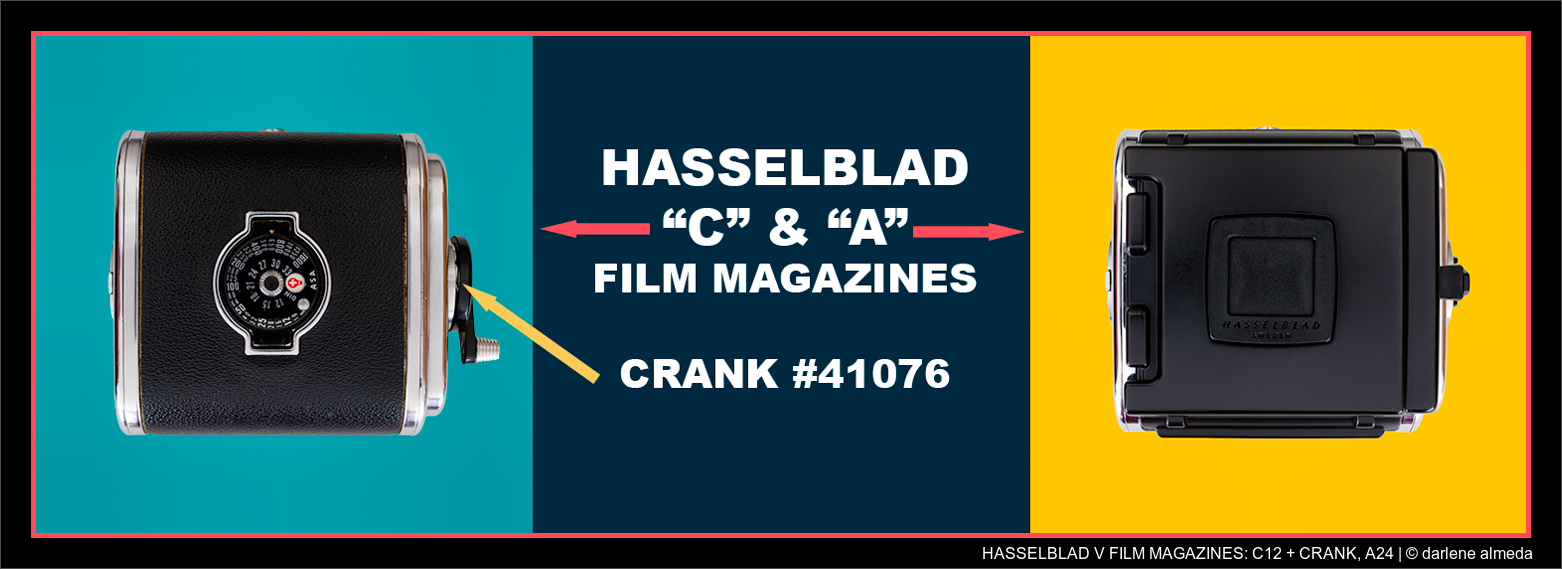
On a “C” magazine, we use its rear peephole (covered with a circular metal plate in the photo above) to see the film frame numbers on its backing paper. This and the manual film advancing allow me to shoot 120 film on my ALPA cameras without needing to purchase an expensive, heavy, non-6×6 format ALPA-Linhof film magazine. I own two very clean “C” magazines manufactured in 1957 & 1967, and I added a Quick Winding Crank #41076 to each. Shortly after acquiring them, I had them rebuilt as needed and replaced all seals so they would last another 50 years. I use them on my Hasselblad and ALPA cameras with excellent results.
A 12 MAGAZINE
The second photo shows an older “A 12” magazine. According to the year dating code, this magazine was manufactured in 1972. This magazine has served me well over the years. A primary difference between this “A” magazine and the latest model, as shown in the above graphic (image #3), is the convenience of having a designated area to store the dark slide while shooting. There is little difference besides convenient dark slide storage and updated cosmetics. To my knowledge, the film gate produces the famous ‘two triangle cutouts’ (“V”s for Victor) on the left side of the film frame on all 120/220 Hasselblad film magazines. Instructions on how to load any of the “A” magazines can be found here.
A 24 MAGAZINE
The third magazine shown in the above graphic is of a late-model A24. I also own a late-model A12 that stays on my 501cm. When I shot special events, I once had six 220 film magazines. You can use 120 film in an A24 magazine, so I have kept mine (see below). You could buy these A24 magazines more reasonably than A12 because 220 film is no longer made, which is a bummer. I prefer the newest film magazines for the dark slide holder and better cosmetics.
POST: 120 FILM IN 220 MAGAZINE

POST: NONS INSTANX BACK
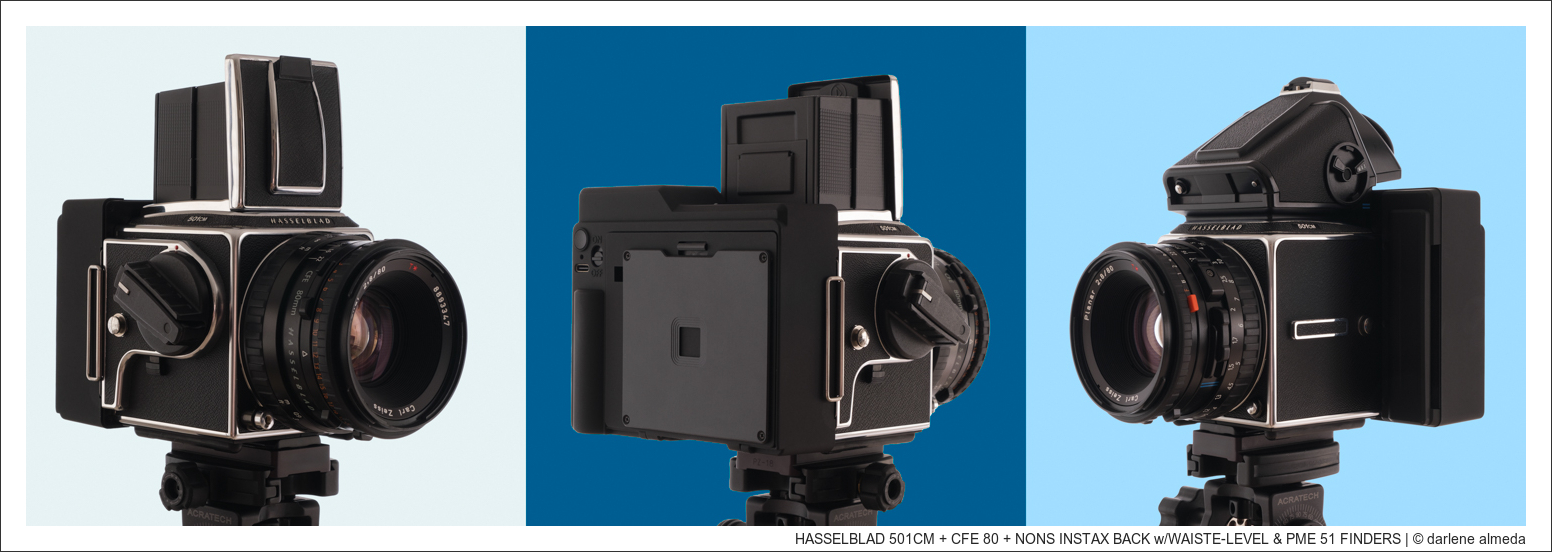
This sweet little box is tailor-made for your Hasselblad, ready-to-rock Instax Square film like it’s nobody’s business. It’s like the yin to your camera’s yang, fitting snugly like a favorite pair of boots. And did I mention the sleek design? It’s so close to Hasselblad’s square format that you’ll get a full Instax frame with a small black border – because every picture needs a little black frame, right? [continue]