
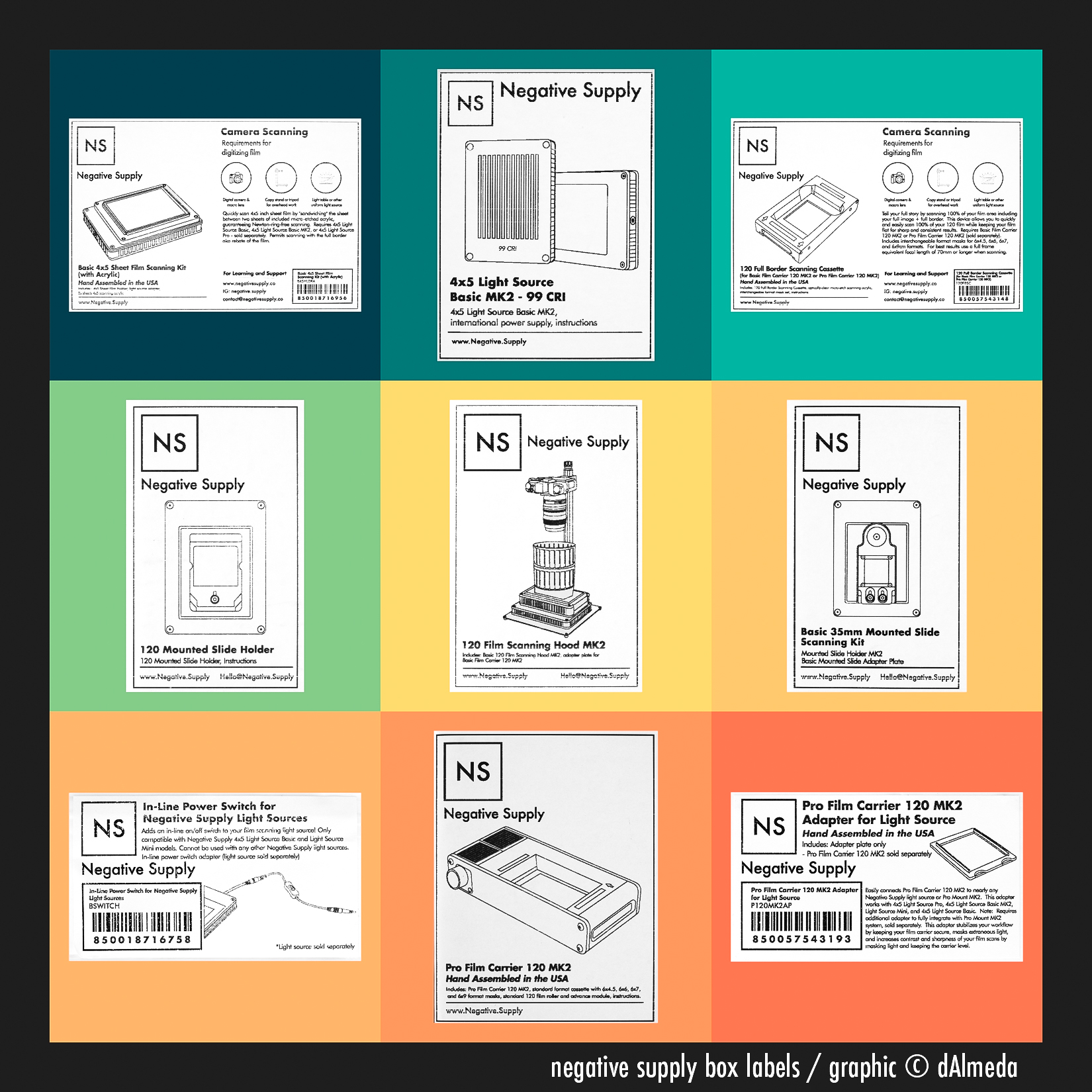
product packaging illustrations © Negative Supply, used here for review and commentary
Intro
I first entered the world of digital scanning in the late 1990s using dedicated scanners from Nikon, Microtek, and Epson. Over time I grew to dislike the scanning process itself, but my love of shooting film prevailed. In those days there were few alternatives. We were in the middle of the film-to-digital transition, and many of us were beginning to build websites that required digital images.
Fast forward to 2017–2018. Around that time I began researching digital camera scanning. I had acquired my first medium-format digital back with Live View, and the pixel count was better than any digital camera I was using at the time. It felt like the right moment to invest in proper tools and begin digitizing my film using a camera-based setup.
After reading through the available options and weighing their pros and cons, I settled on the Skier Copy Box system. I stayed with Skier through three generations of their copy boxes and film holders, using their products from 2018 through 2025. Over those seven years a lot changed—not only in Skier’s product line but also in my own needs.
Today I have far fewer individual frames to digitize. Over time I have quietly worked my way through most of my archives. Many of the Print File pages containing strips and individually cut negatives have already been digitized—although I hesitate to ever call an archive truly “finished.” My needs gradually shifted toward digitizing entire rolls in a single sitting and doing so as efficiently as possible. Even though I came to appreciate camera-based digitizing far more than flatbed scanning, there are still many things I would rather be doing than standing at a copy stand.
While I would still recommend the Skier Copy Box system, I eventually found that the offerings from Negative Supply suited my needs better—particularly for scanning uncut rolls of film. But it’s not just about uncut rolls; it’s the system as a whole. It can be an expensive rabbit hole to go down, but over time I’ve been able to assemble a setup that fits the way I work.
What follows is a discussion of the Negative Supply digitizing tools I use and why. For details on these components, please visit Negative Supply.
Light Source Basic MK2 – 99 CRI
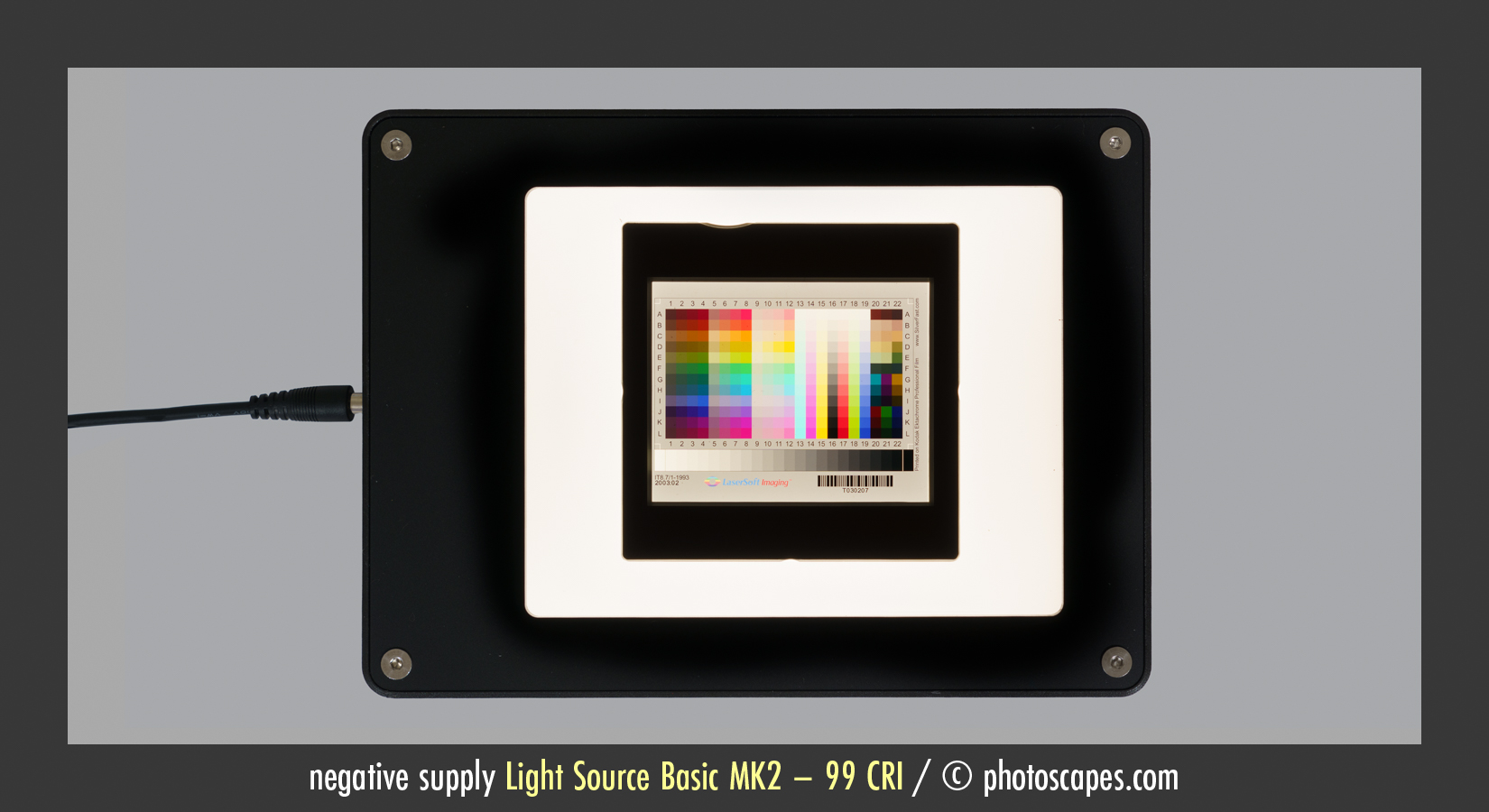
It cannot be overstated: the light source is one of the most critical components in film digitizing. Brightness matters, of course, but the color quality of the light is equally critical.
Why CRI Matters
CRI (Color Rendering Index) measures how accurately a light source reproduces color compared to natural daylight. When digitizing film, the camera is essentially photographing the negative or transparency. If the light source has poor color rendering, subtle color relationships in the film can shift or become distorted before the image ever reaches your software. A light source rated at 99 CRI, like the Negative Supply MK2, produces a very neutral spectrum of light, helping ensure that the colors recorded by the camera remain as faithful as possible to the original film.
Even Illumination
Equally important is the evenness of the light source. When digitizing film, any uneven illumination can show up as brightness falloff or subtle gradients across the frame. A well-designed light source uses diffusion to spread the light evenly across the film area so the camera records a consistent exposure from edge to edge. This becomes especially important with larger formats where uneven light can be more noticeable during post-processing.
For some applications I still use other light sources. The Kaiser lightbox I use when digitizing my 6×17 film works well, and the Sunray Copy Box I previously used was an extremely bright, highly color-correct light source. It also featured a three-position rocker switch for brightness control. In practice, however, I always kept it on the lowest setting for two reasons. First, even the lowest setting was exceptionally bright—brighter than most lightboxes I have used. Second, it generated heat quickly. Since heat can potentially damage film, I was always conscious of how quickly the unit warmed up. This is something worth paying attention to with any light source used for digitizing film, since prolonged heat exposure can slowly affect the physical stability of the film base.
With that said, the Negative Supply Light Source Basic MK2 – 99 CRI has proven to be a very competent light source. It does produce some heat, but not nearly as quickly as the Sunray unit. In day-to-day use it provides bright, even illumination with excellent color quality, which is exactly what is needed for reliable camera digitizing.
My only complaint concerns an optional accessory I purchased for it: the in-line power switch. This add-on provides a convenient on/off button for the light source, but unfortunately it does not stay securely connected and tends to fall out easily. That’s not ideal for a piece of equipment designed for regular workflow use.
Overall, the Light Source Basic MK2 provides the balance of brightness, color accuracy, and even illumination I look for when digitizing film.
Film Carriers and Film Transport
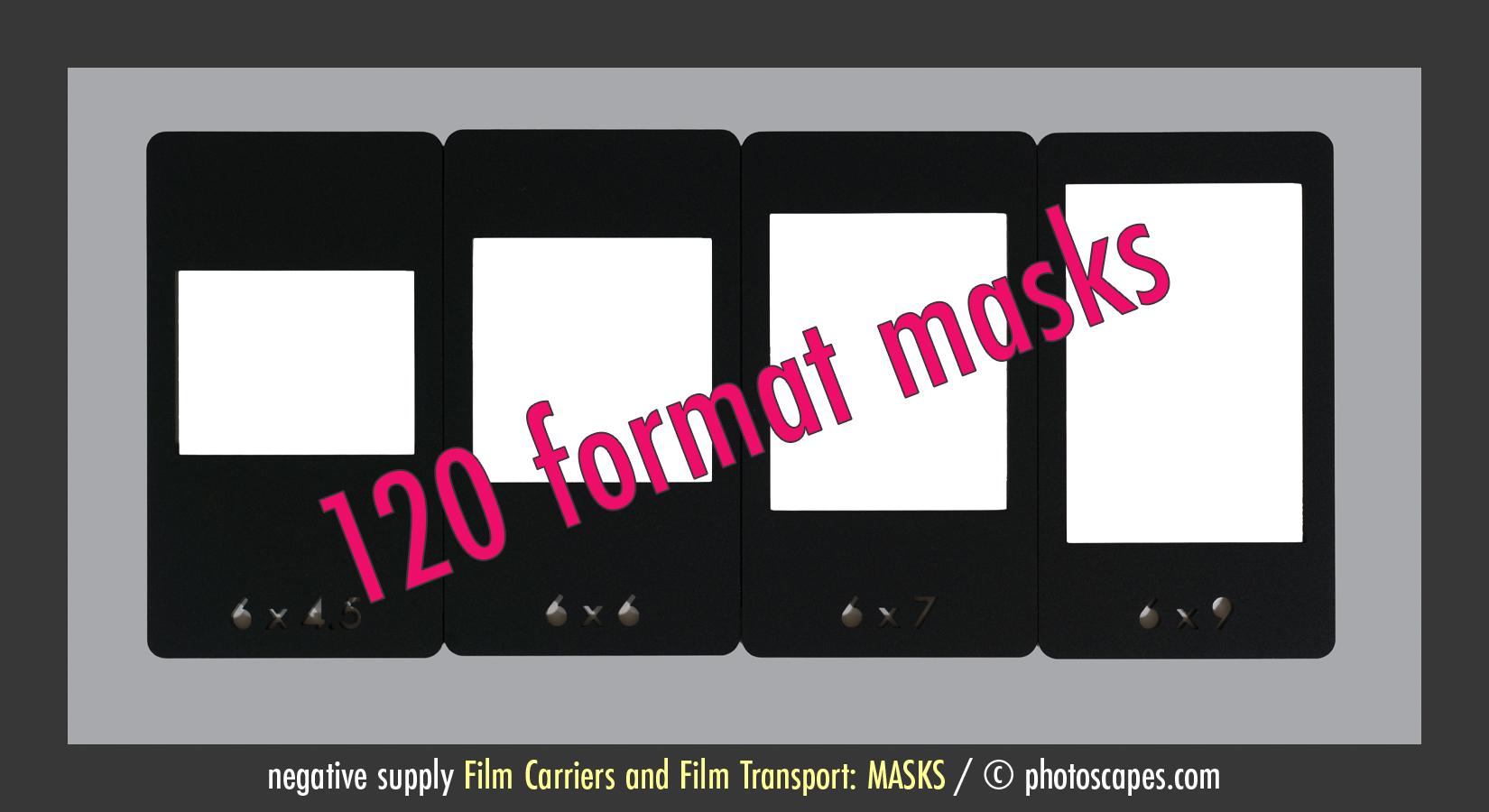
Once a reliable light source is in place, the next important part of a camera-digitizing setup is the film carrier system. The carrier’s job may sound simple, but it is critical: it must hold the film flat, keep it aligned with the camera sensor, and allow the film to advance smoothly from frame to frame.
Film flatness becomes especially important when digitizing with modern high-resolution cameras or digital backs. Even a slight curl in the film can move parts of the negative out of the plane of focus when working at high magnification. A well-designed carrier supports the film properly while still allowing it to move freely through the holder.
Workflow efficiency is another major consideration. When digitizing large archives, the ability to advance film quickly—especially uncut rolls—can make a tremendous difference in the amount of time spent at the copy stand. Over the years my needs gradually shifted toward systems that allow me to digitize entire rolls in a single sitting rather than working frame by frame.
Negative Supply has developed a modular system of film carriers and accessories designed to address these needs. Their components are designed to maintain good film flatness while allowing smooth film transport, and they integrate well with their light source.
Below are the Negative Supply carriers and accessories I currently use.
Pro Film Carrier 120 MK2
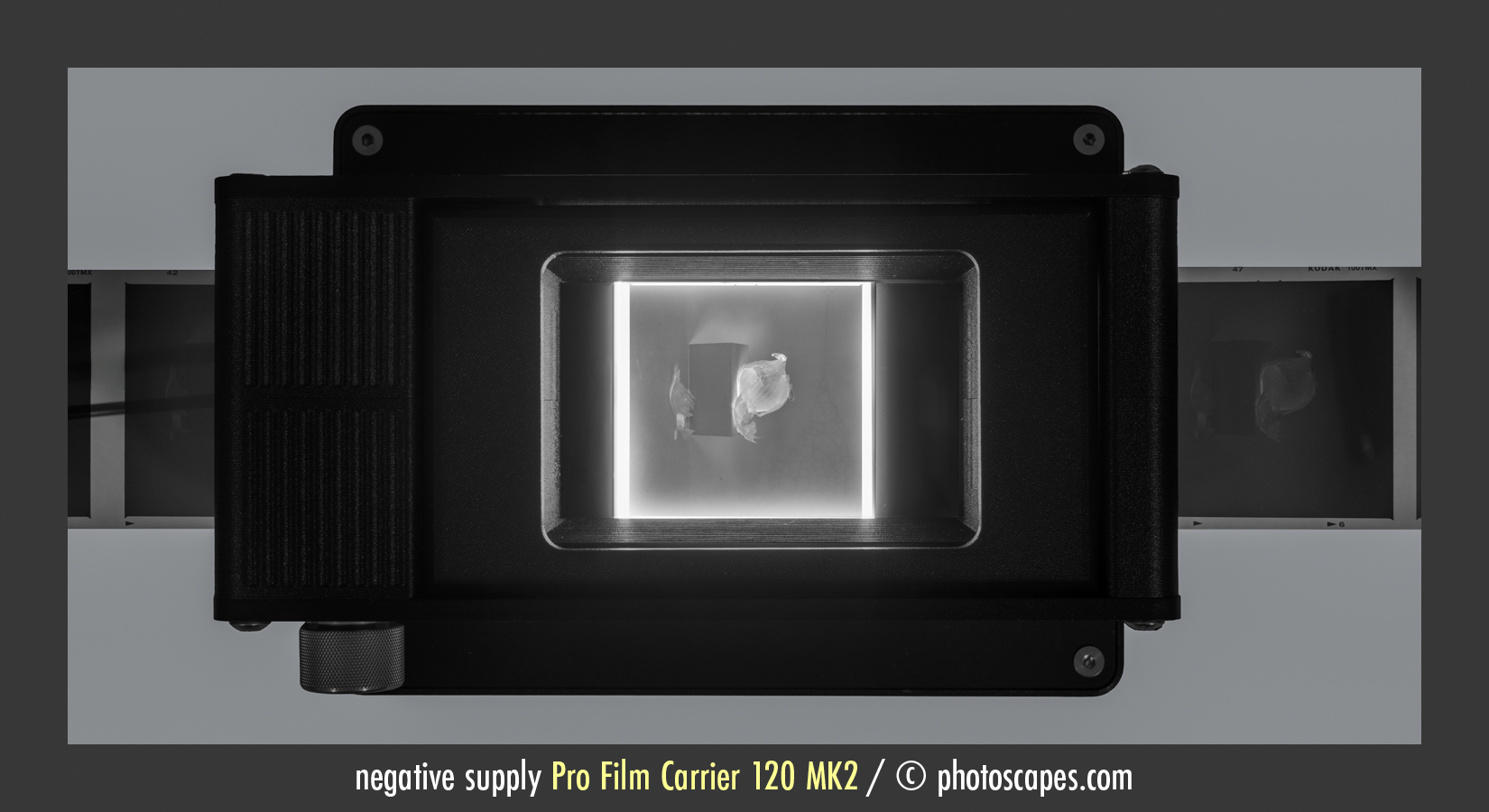
The Pro Film Carrier 120 MK2 is the core of my medium-format digitizing workflow. It is designed to hold 120 roll film securely while allowing the film to advance smoothly from frame to frame. This allows me to digitize an entire roll in one sitting without constantly removing and repositioning individual frames.
Build quality is excellent. The carrier holds the film flat while still allowing it to move easily through the transport path. In practical use, this creates a very efficient workflow when working through long strips or uncut rolls of medium-format film.
For photographers digitizing larger film archives, the ability to move steadily through a roll without constant repositioning makes a noticeable difference in both speed and overall comfort at the copy stand.
I would purchase this carrier again, as I prefer digitizing an entire roll after development, and 120 film represents the largest portion of my archive. There is a bit of a learning curve at first—especially when securing the first couple of frames—but once familiar, the process becomes much more fluid.
For rolls where the leader has been cut, I save a small strip of film that would otherwise be discarded and tape it to the roll using polyester Mylar film tape. This makes it easier to feed the film into the carrier and get started smoothly.
Pro Film Carrier 120 MK2 Adapter Plate for Light Source
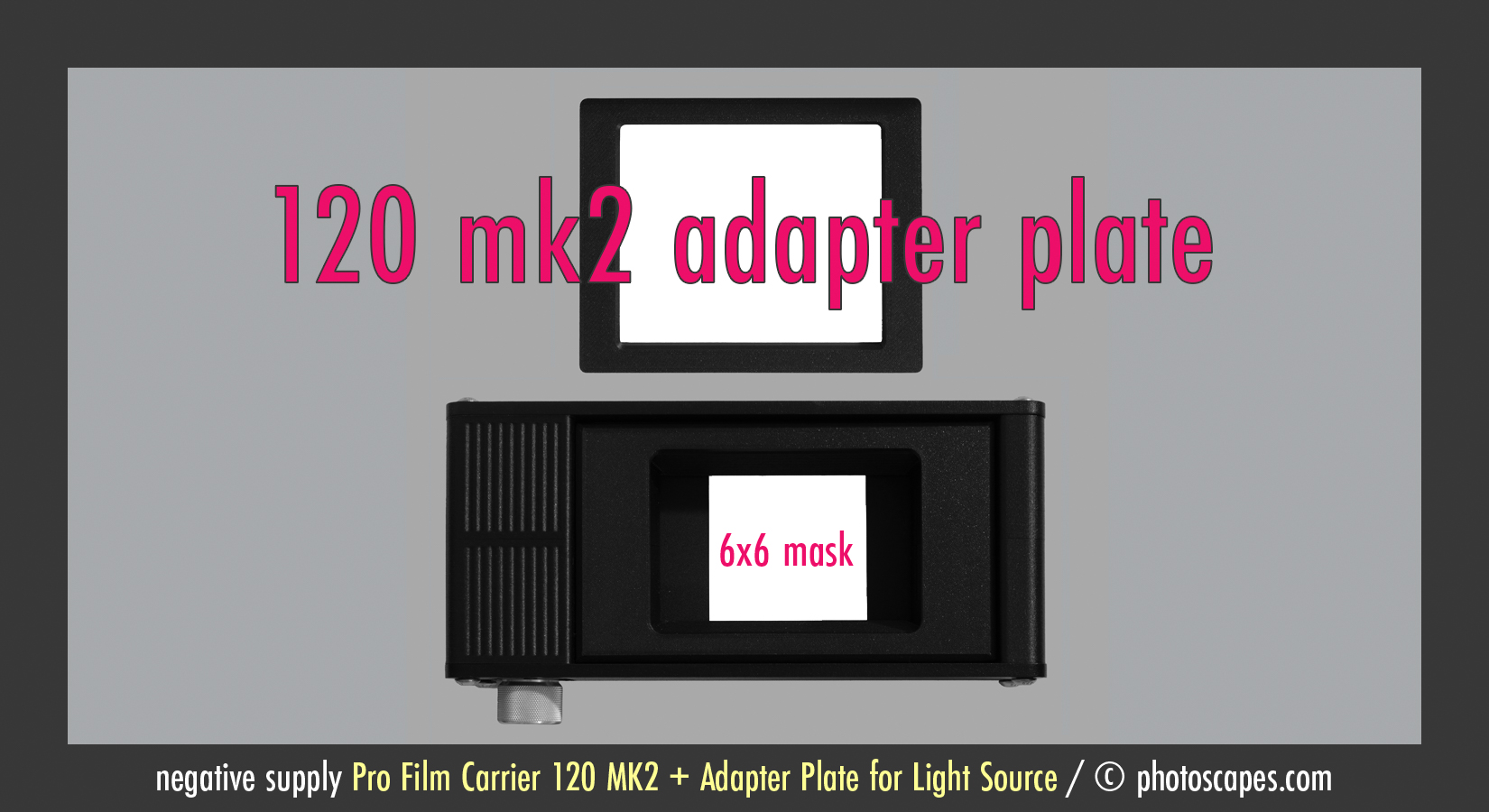
The Adapter Plate for the Pro Film Carrier 120 MK2 allows the carrier to integrate directly with the Negative Supply light source. The plate aligns the carrier with the illuminated surface so the film remains centered over the light source while advancing through the holder.
This may sound like a small accessory, but proper alignment between the carrier and the light source helps maintain consistent illumination across the frame.
120 Full Border Scanning Cassette
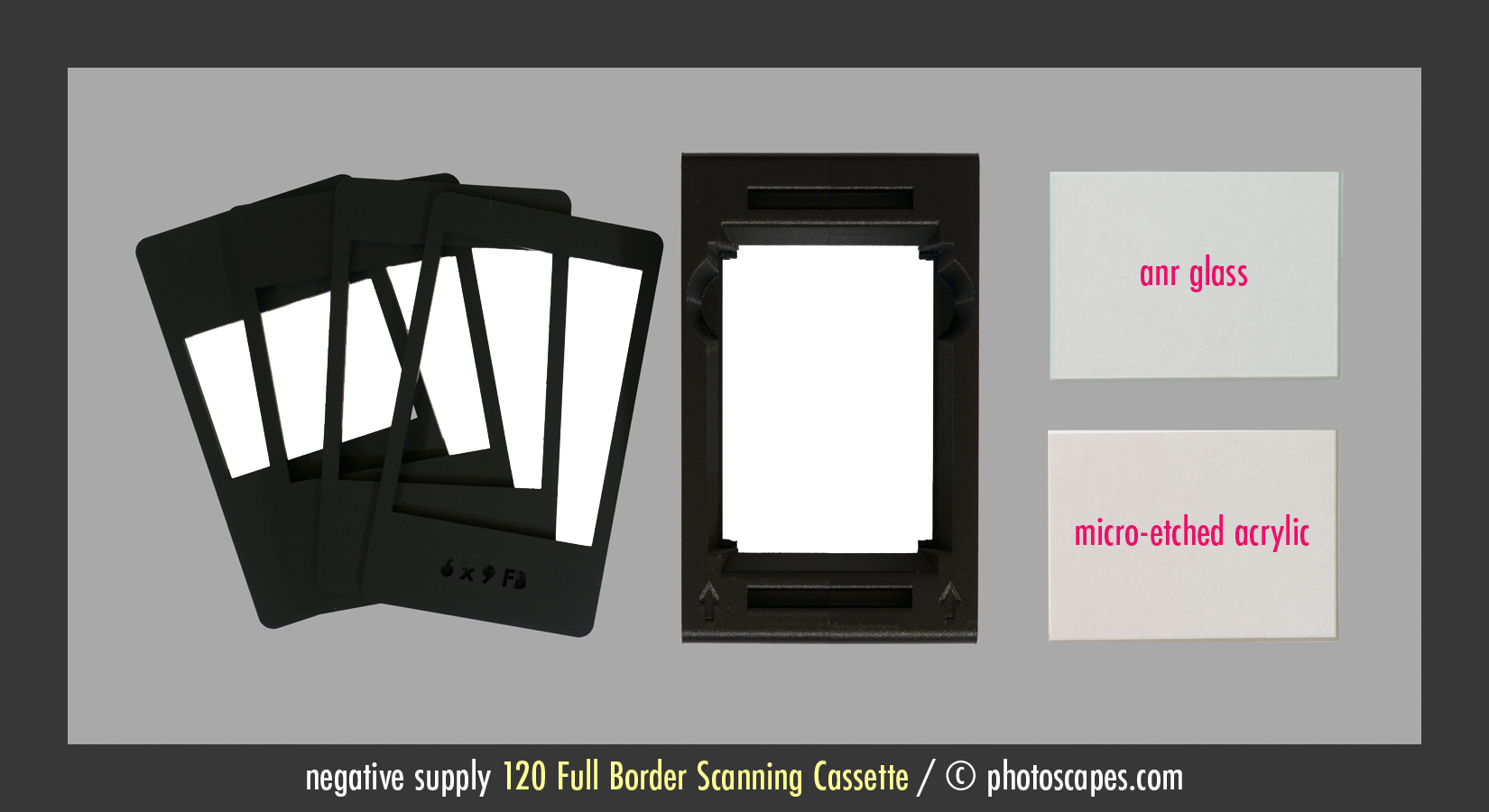
The 120 Full Border Scanning Cassette allows the entire film frame to be digitized, including the rebate area along the edges of the negative. For photographers interested in preserving the full frame—including film markings or edge information—this cassette makes that possible.
It also helps maintain good film alignment while still allowing the film to move through the carrier.
In practice, however, I have not found this kit to be as user-friendly as I had hoped. It requires a fair amount of patience and precision to get the film positioned and moving properly through the cassette. While it can produce good results, the process feels more finicky than I would prefer for regular use.
It may simply be a matter of personal workflow, but my impression is that this design could benefit from refinement. Negative Supply has since introduced other solutions that take a different approach to film handling (see their Pro Film Carrier 4×5), and those may reflect an evolution in their design direction.
For my workflow, I would not purchase this kit again. When it works, it delivers—but it requires more effort and attention than I find practical for day-to-day digitizing.
120 Mounted Slide Holder (6×6)
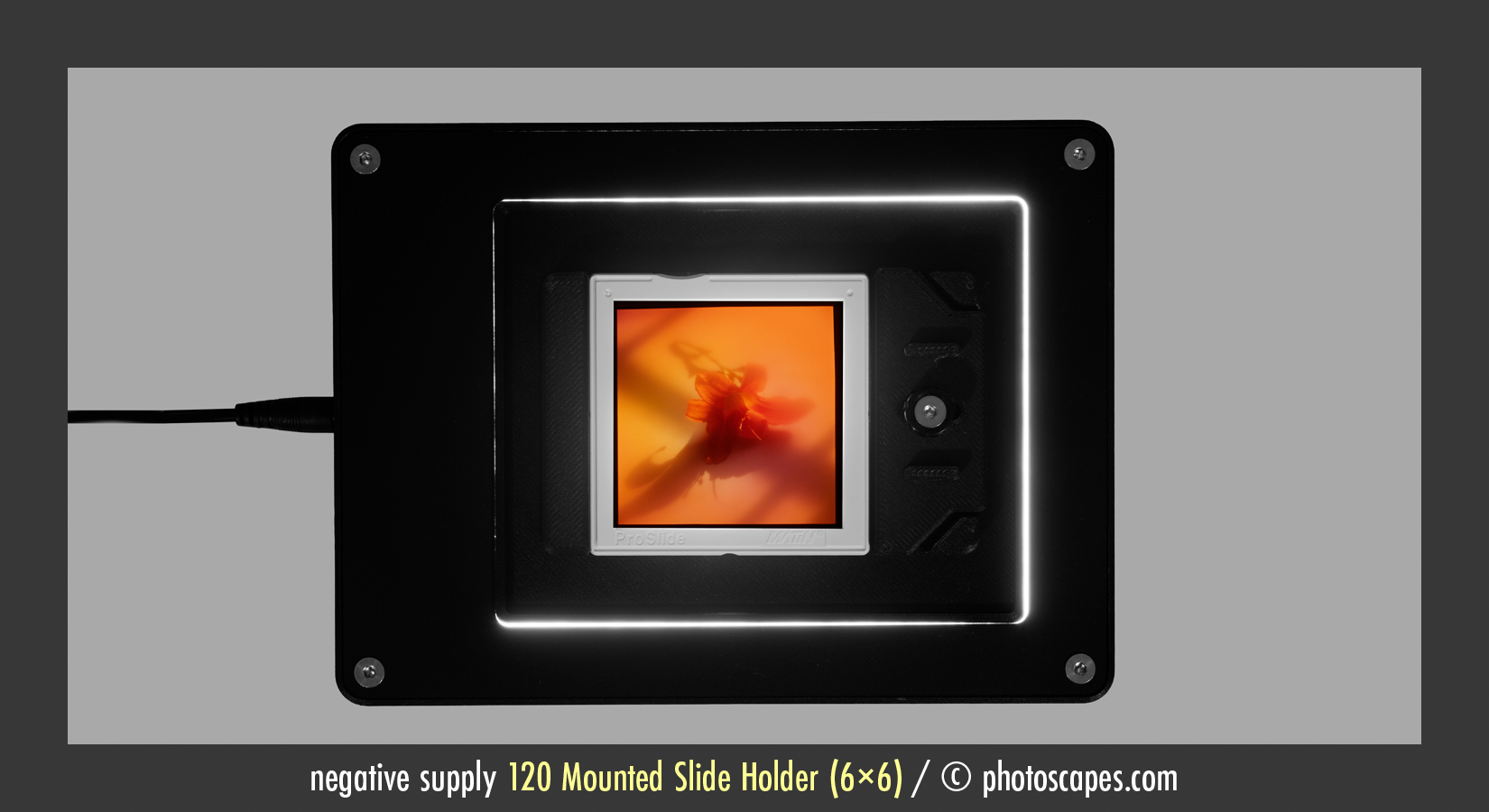
For mounted medium-format transparencies and negatives, the 120 Mounted Slide Holder provides a convenient way to digitize 6×6 mounted film.
I use the word film rather than simply transparencies because many of my negatives are also mounted in slide holders. I have been shooting the Hasselblad 500 system for over forty years, and decades ago many of my images were cut into individual frames when I sent them to professional labs for prints or four-color separations for the printing press during my years running a busy studio.
Mounted film presents a different handling challenge than roll film, and having a dedicated holder helps keep the workflow simple and efficient.
This holder works as it should, with an easy-to-adjust design that accommodates different sizes of slide or film mounts. I have been pleased with it and would purchase it again.
120 Film Scanning Hood MK2
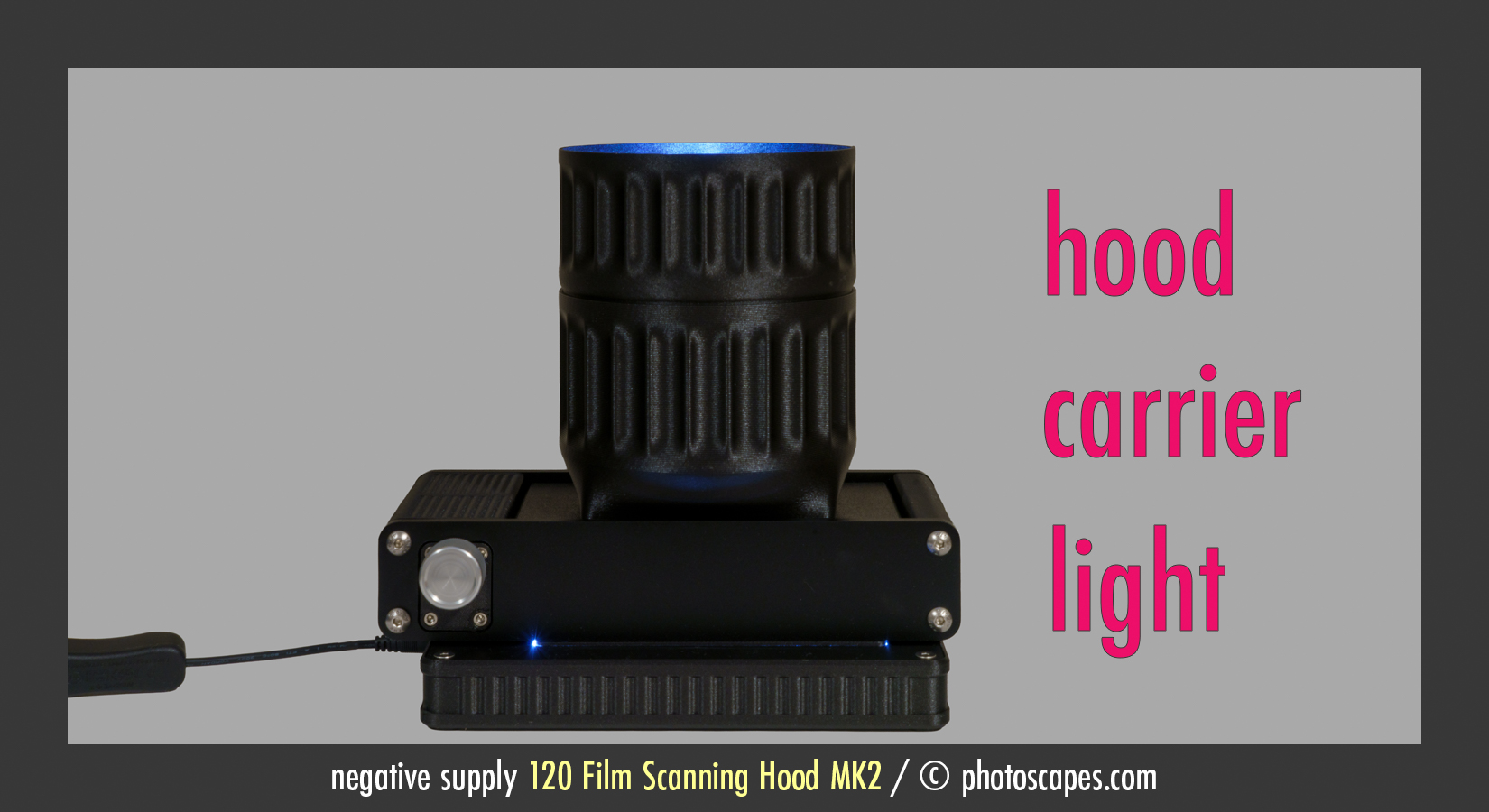
The 120 Film Scanning Hood MK2 helps block stray light during the digitizing process. Controlling ambient light around the carrier can improve contrast and consistency, especially when working in a room that is not completely dark.
It also helps reduce reflections that might otherwise affect the final digitized image.
For 4×5 film digitizing, I often use a bellows viewing hood from my Ebony cameras, which performs a similar function and works just as well. That said, having a dedicated hood designed for this system is convenient and integrates cleanly into the workflow.
Overall, I am pleased with the 120 hood and glad to have it in my toolbox.
Basic 4×5 Sheet Film Scanning Kit
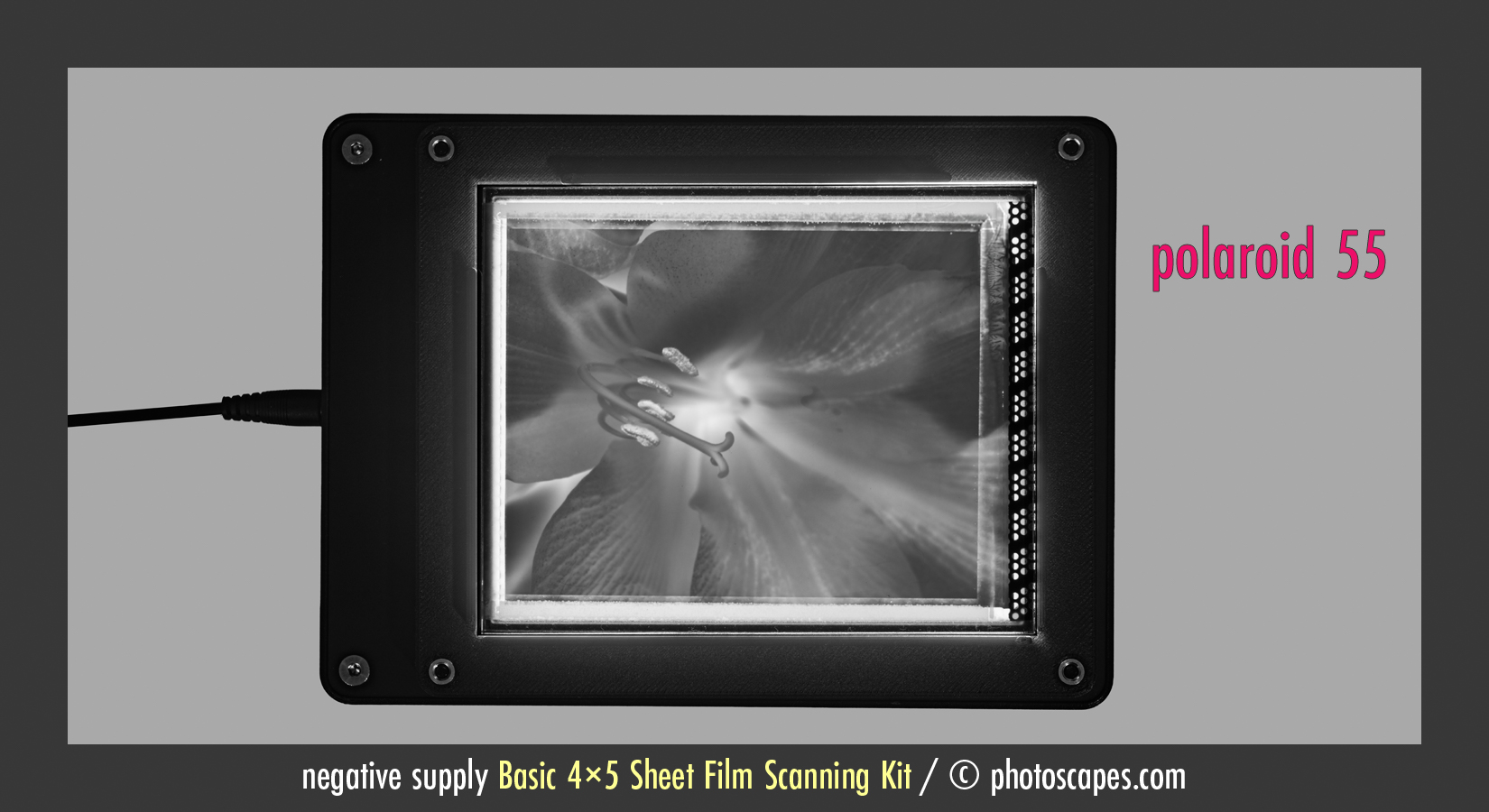
This kit provides a simple, reliable way to hold 4×5 sheet film flat and aligned over the light source while capturing the image with a digital camera. It includes two sheets of micro-etched acrylic used to sandwich the film between them, helping maintain good flatness during capture.
In the example shown above, I purposely used a Polaroid 55 negative from my archive to demonstrate that this setup accommodates not only standard 4×5 sheet film but also Polaroid materials.
I am very happy with the 4×5 sheet film scanning kit and would recommend it.
35mm Basic Mounted Slide Scanning Kit
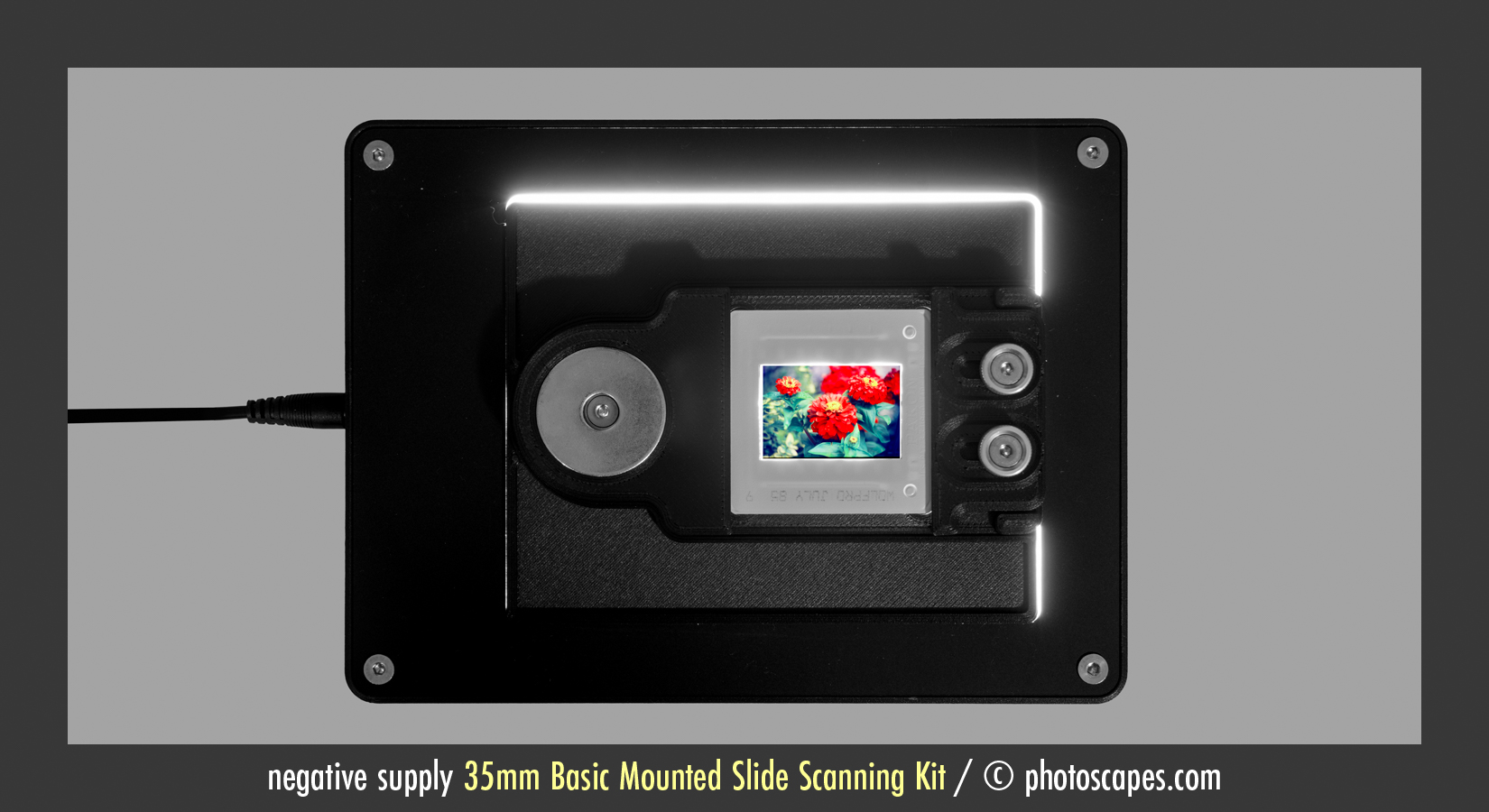
For mounted 35mm slides and negatives, the Basic Mounted Slide Scanning Kit provides a straightforward solution for positioning film during digitizing. It keeps the mounted frame properly aligned with the light source and camera while allowing quick changes between slides.
For photographers working through collections of mounted film, a dedicated holder like this helps keep the workflow organized and efficient.
Although I cannot remember the last time I shot 35mm film, I will likely add the Basic Film Carrier 35 MK2 to my setup at some point. Who knows—maybe I will find myself loading film into the Nikon F3T again.
Closing Statement
Over time I have found that the right combination of carriers and accessories makes a significant difference in both workflow and consistency when digitizing film. While no system eliminates the time involved in working through an archive, tools that keep the film flat, aligned, and easy to advance make the process far more efficient.
The Negative Supply components described above have gradually become the backbone of my digitizing setup, allowing me to move steadily through both rolls and individual frames as I continue working through my film archive and newly processed film.