HASSELBLAD 501 CM | STUDIO
The art of authentic representation through observation, light, and thoughtful interpretation
What Is Naturalistic Photography?
Naturalistic photography is a photographic style that emphasizes the believable representation of subjects, environments, and everyday experiences. Rather than relying on exaggerated effects or highly stylized interpretations, it seeks to preserve the inherent qualities of light, color, texture, form, and atmosphere.
The objective is not necessarily to reproduce reality with scientific accuracy, but to create an image that feels convincing and faithful to the essential character of its subject.
Naturalistic photography can be practiced across nearly every photographic genre, including portraiture, landscape, wildlife, architecture, still life, and commercial photography.
It is important to distinguish naturalistic photography from nature photography. Nature photography describes what is being photographed, while naturalistic photography describes how a subject is represented.
A carefully arranged studio still life can be just as naturalistic as a landscape photographed in available light. Likewise, a portrait made under controlled artificial illumination may preserve a more natural expression than one photographed spontaneously outdoors.
The defining characteristic is not the subject, equipment, or working environment, but the photographer’s intention to create a believable visual representation.
Naturalism in Art and Photography
Naturalism has a long history in the visual arts, particularly in nineteenth-century painting and literature.
Artists associated with naturalism emphasized close observation of the visible world, including ordinary people, rural environments, and the details of everyday life. Their work challenged idealized representations by paying greater attention to the appearance and circumstances of their subjects.
Photography shares many of these concerns, although the medium’s ability to record visible detail does not automatically make every photograph naturalistic.
The photographer still determines the composition, lighting, exposure, perspective, and interpretation of the scene.
A photograph may depict an actual subject while presenting it in a highly exaggerated or deliberately artificial manner.
Naturalism is therefore an artistic approach rather than an automatic property of photographic recording.
Characteristics of Naturalistic Photography
Naturalistic photographs can vary considerably in appearance, but several qualities are commonly associated with the style.
—
Believable Lighting
Lighting plays a central role in determining whether a photograph appears naturalistic.
Although natural light is frequently associated with this style, artificial illumination can produce equally convincing results.
A photographer may use studio strobes, continuous lights, reflectors, or carefully positioned modifiers to create illumination that resembles the way light naturally interacts with a subject.
The important consideration is not where the light originates, but whether its direction, quality, and relationship to the subject feel believable.
—
Authentic Color and Tonality
Naturalistic photography generally maintains convincing relationships between colors and tones.
This does not require absolute color accuracy. Lighting conditions, photographic materials, and individual perception all influence how colors appear.
Film stocks have distinctive color characteristics, just as digital cameras and processing methods influence color reproduction.
A photograph can remain naturalistic despite these differences when its colors support a believable interpretation of the scene.
Black and white photography can also be naturalistic, even though the world is not ordinarily perceived without color.
In monochrome photographs, the relationships between light, shadow, texture, and form become especially important.
—
Recognizable Texture and Detail
Naturalistic photography often emphasizes the physical qualities that make a subject recognizable.
The delicate structure of feathers, the texture of weathered wood, the surface of a ceramic vessel, or the subtle variations in human skin can all contribute to a convincing representation.
These characteristics need not be rendered with maximum sharpness.
What matters is whether the photograph preserves the subject’s essential appearance.
—
Thoughtful Composition
A naturalistic photograph may appear spontaneous, but its composition can be carefully considered.
The photographer chooses what to include, what to exclude, and how the visual elements relate to one another.
Even a meticulously arranged studio composition can feel natural when the relationships between its objects remain believable.
Naturalism does not require the absence of artistic control.
—
Restrained Processing
Post-processing is compatible with naturalistic photography when it supports the intended representation.
Adjustments to exposure, contrast, color balance, and tonal relationships may be necessary to reproduce the photographer’s visual experience.
The distinction lies in whether those adjustments preserve the subject’s character or substantially transform its appearance.
Naturalism is not synonymous with an unprocessed photograph.
Naturalistic Photography Across Four Decades
Looking through my photographic archive, I selected four photographs that demonstrate how naturalistic photography can be approached through different subjects, equipment, and working methods.
What surprised me was the chronology.
The earliest photograph was made in 1985, while the most recent was created in 2026. Together, these images represent 41 years of my photographic life.
Three were photographed on film, and one was captured digitally.
They include wildlife, portraiture, landscape, and studio still life photography.
Despite their differences, all four share a common intention: to preserve the recognizable character of the subject while allowing thoughtful lighting and composition to contribute to the photograph.
The circumstances under which a photograph is created are not always apparent in the finished image. A photograph that appears effortless may represent considerable preparation, technical knowledge, improvisation, and determination.
—
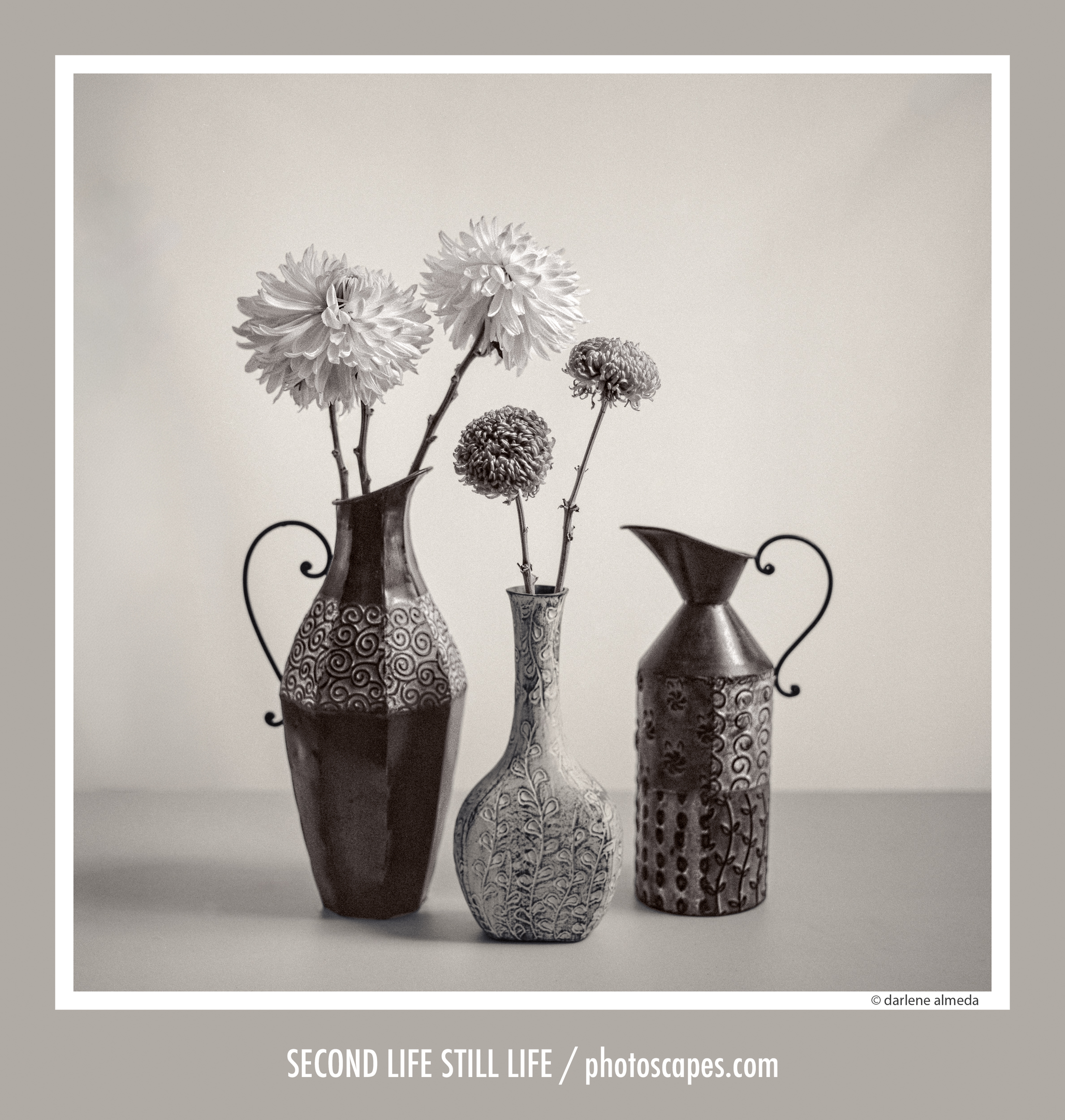
Second Life, Still Life | 2026
Naturalistic studio lighting through continuous illumination and ambient light.
In Second Life, Still Life, I arranged three decorative vessels with flowers, paying particular attention to their contrasting shapes, surface textures, and tonal relationships.
Although the composition was carefully constructed in my studio, I wanted the lighting to remain gentle and believable, allowing the objects and flowers to retain their natural character.
For this photograph, I used a blending of light sources. Rather than firing the flash tubes of my studio strobes, I used their modeling lamps as adjustable continuous light sources.
By controlling the power, shape, and direction of the modeling lights, I could establish their relationship to the existing ambient illumination. Shutter speed then allowed me to control the recorded exposure from these continuous sources.
The technique allowed me to explore the interaction of the different light sources without introducing a burst of flash.
The resulting photograph reveals the delicate structure of the flower petals and the decorative details of the vessels while maintaining a quiet, believable quality of light.
This photograph illustrates an important principle of naturalistic photography: natural-looking illumination does not have to come from a natural light source.
Carefully controlled studio lighting can preserve the authentic appearance of a subject just as effectively as available light.
The photograph was made on black and white film, demonstrating that naturalistic representation does not depend upon color or digital capture.
—
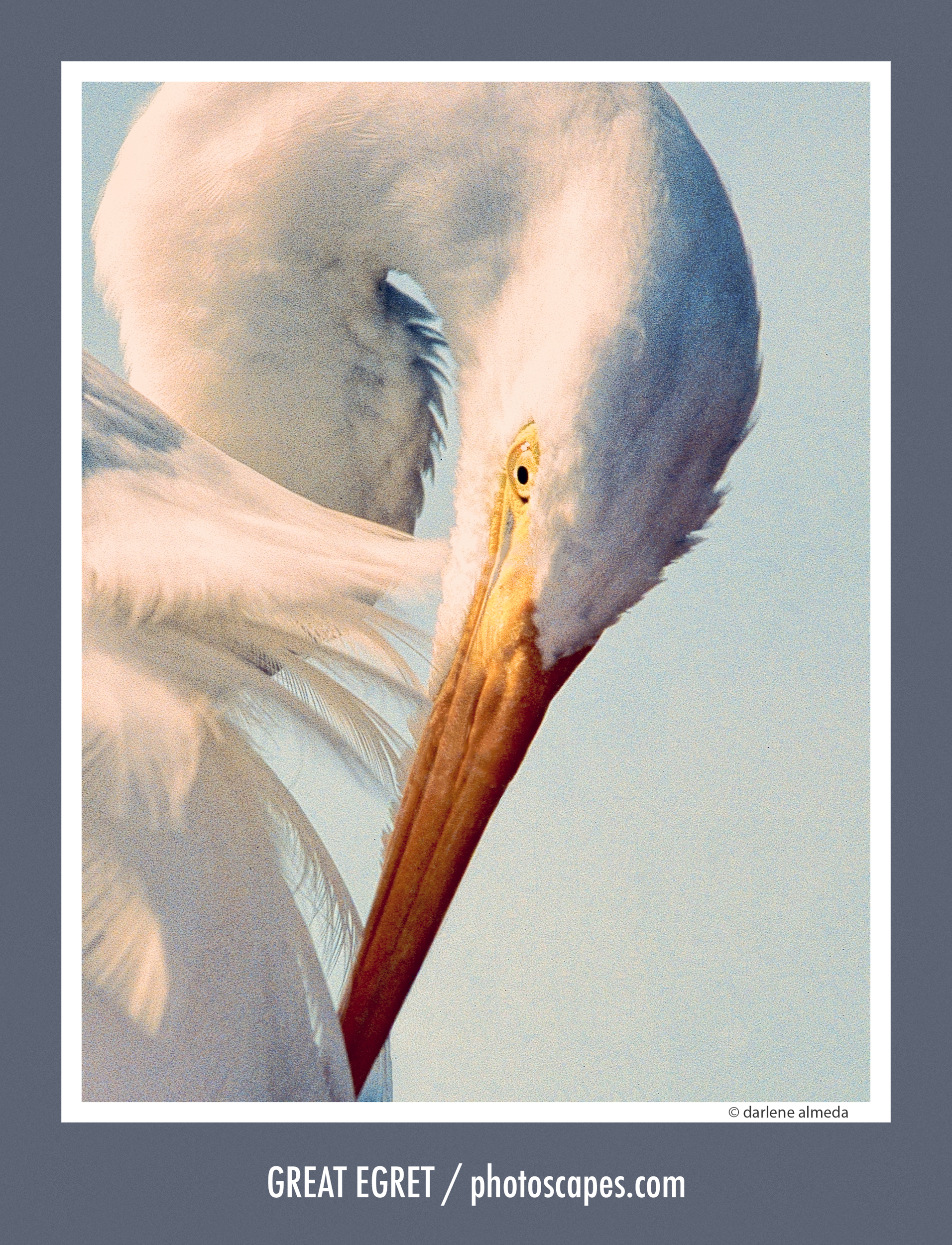
Great Egret | 1985
An observational study of wildlife and natural behavior.
Photographed on film in 1985, Great Egret represents a different approach to naturalistic photography.
Unlike a studio still life, where the photographer controls the arrangement and lighting, wildlife photography frequently requires responding to a subject whose behavior cannot be directed.
In this photograph, the egret is engaged in the ordinary act of preening.
The bird’s posture, delicate feather structure, and recognizable physical characteristics become the primary elements of the composition.
There is no need to manufacture a dramatic event. The behavior itself provides the visual interest.
What appeals to me about naturalistic wildlife photography is the opportunity to observe an animal without imposing a human narrative upon its actions.
The photograph can be carefully framed and aesthetically considered while remaining faithful to the behavior and character of the subject.
—
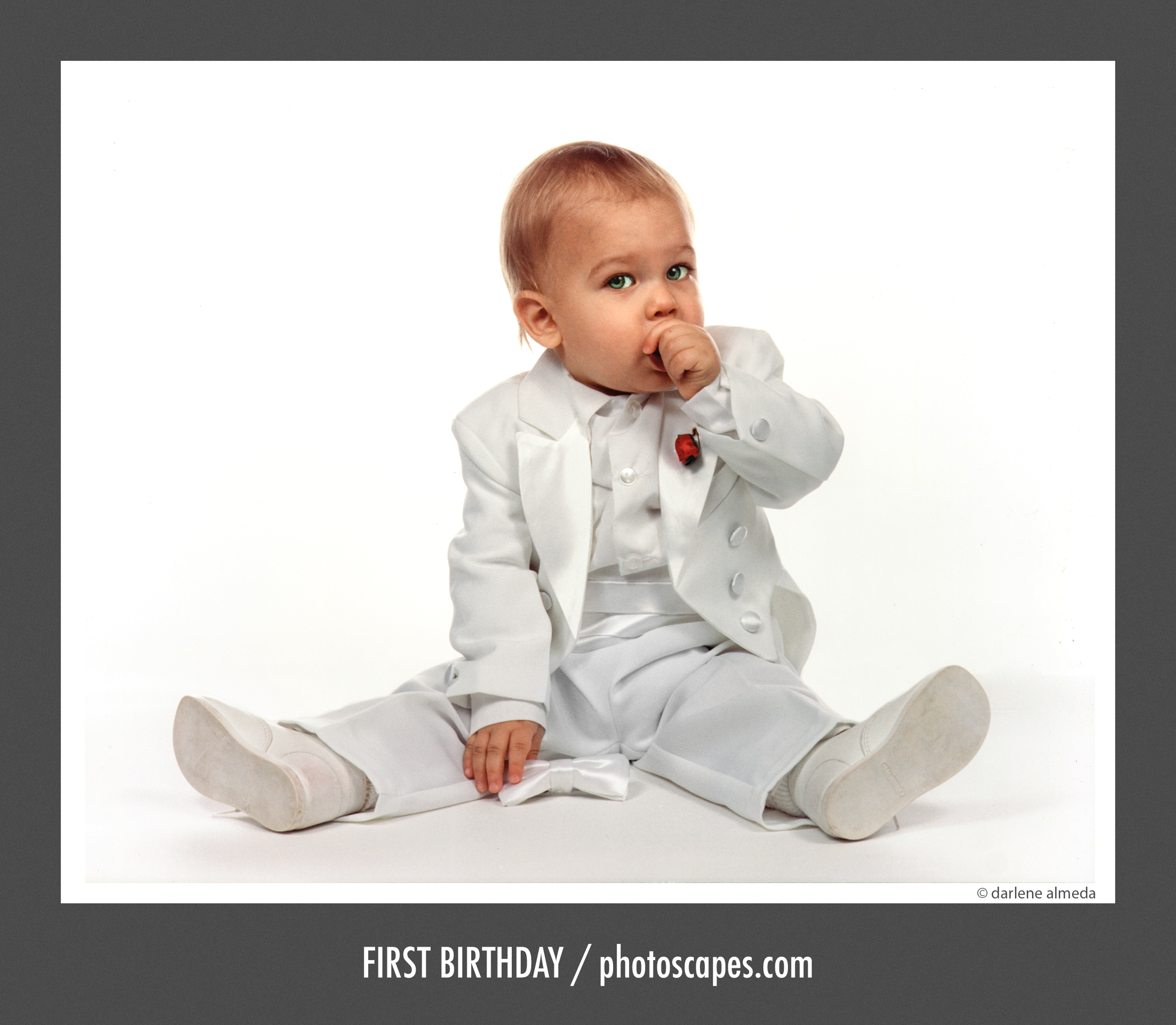
First Birthday (Thomas) | 1989
Naturalistic portraiture, improvisation, and the importance of recognizing a moment.
First Birthday is a portrait of my son, Thomas, photographed on his first birthday in 1989.
Although the finished photograph resembles a traditional studio portrait, it was actually made on a coffee table in the tiny living room of our Atlanta apartment. At the time, I did not have a dedicated studio, and our family was experiencing financial difficulties.
I had spent the previous day photographing a wedding, working late into the evening and arriving home around midnight. By the following afternoon, I was exhausted, but it was my baby’s first birthday, and I was determined to make his portrait.
I had remembered to save a remnant of 70mm Kodak VPS II color negative film from the wedding assignment so I would have something to photograph him with.
My sister had sent a little tuxedo for the occasion, and I improvised a studio using our coffee table, a large piece of white backdrop paper, inexpensive light stands, and the Vivitar 285 speedlights I used for wedding and event photography.
While waiting for my Quantum batteries to finish charging, I prepared the arrangement and hoped everything would come together.
The expression that makes this photograph so memorable was entirely unplanned.
Thomas had decided he wanted absolutely nothing to do with the bow tie I was attempting to put on him. After another unsuccessful effort, I noticed him sitting quietly, thumb in his mouth, waiting for me to try again.
I recognized the moment and made the exposure.
That small gesture and wonderfully unselfconscious expression became the photograph I had hoped to make, although certainly not in the way I had planned.
This image illustrates an important distinction between naturalistic portraiture and candid photography. The setting, lighting, and composition were deliberately constructed, but the expression was spontaneous and authentic.
Over the years, I have used First Birthday as a teaching example to demonstrate that photographic knowledge, creativity, and resourcefulness can often accomplish more than elaborate equipment or a sophisticated studio.
Understanding light, exposure, composition, and the capabilities of the tools available to you makes it possible to work successfully under less than ideal circumstances.
Sometimes a little determination, a remnant of film, and crossed fingers are all you have.
And sometimes the photograph happens while you’re waiting for a one-year-old to cooperate.
For me, First Birthday remains both a treasured family photograph and a reminder that some of the most meaningful images emerge when preparation meets an unexpected moment.
—
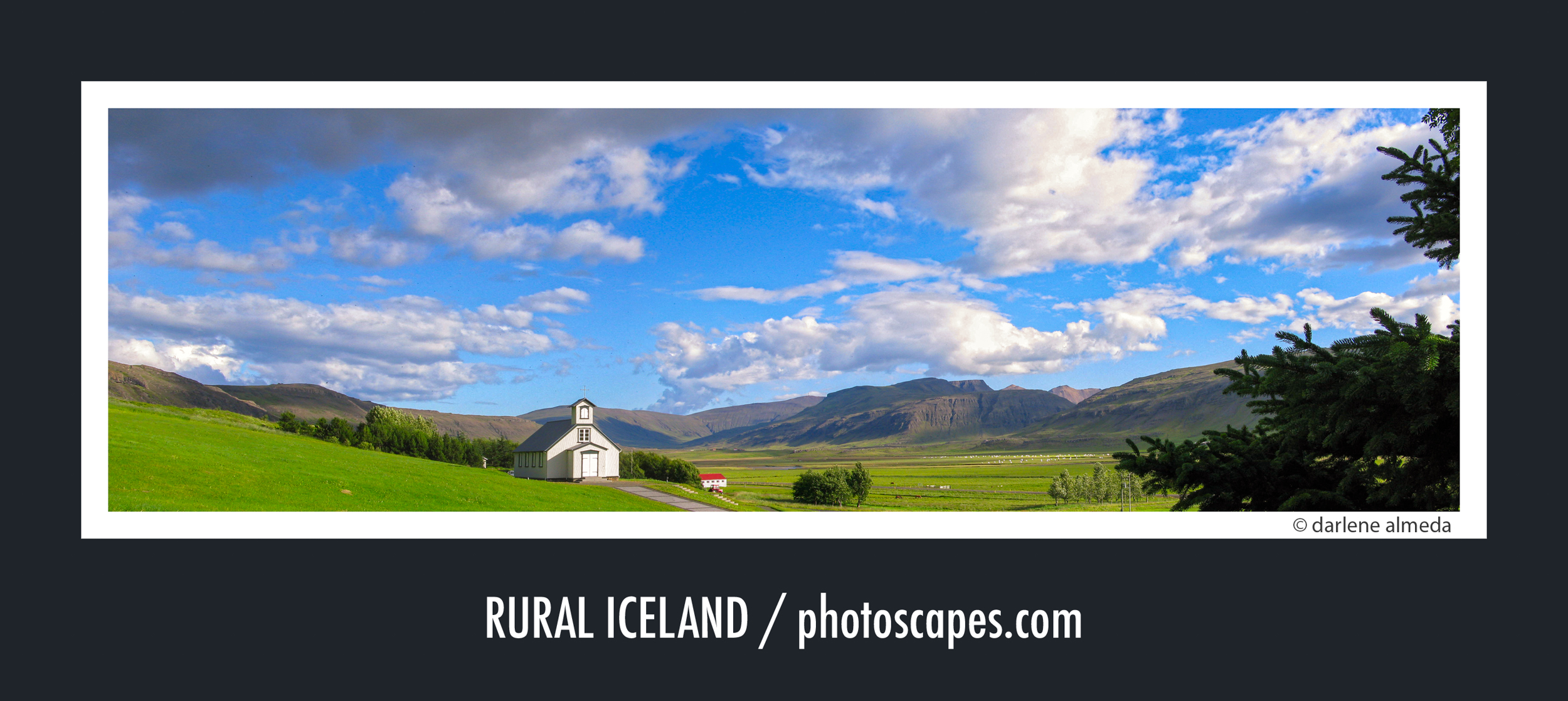
Rural Iceland | 2012
A naturalistic landscape emphasizing atmosphere and a sense of place.
Rural Iceland was photographed digitally in 2012.
The landscape presents a recognizable relationship between the open fields, distant mountains, buildings, and expansive sky.
Rather than relying on unusual optical effects or exaggerated visual treatment, the photograph emphasizes the existing character of the environment.
The composition establishes a sense of scale and distance, allowing the viewer to understand the relationship between the rural settlement and the surrounding landscape.
Naturalistic landscape photography does not require the photographer to include everything within a scene.
Careful framing, timing, and exposure remain important creative decisions.
The objective is to organize the visual information in a way that communicates the character of the place without substantially altering its appearance.
This photograph also demonstrates that digital photography and film photography are equally capable of producing naturalistic images.
The medium changes, but the underlying photographic intention can remain consistent.
Naturalistic Photography ≠ Nature Photography
The distinction between naturalistic and nature photography is particularly important.
Nature photography is a genre defined by subject matter, generally encompassing wildlife, plants, landscapes, and other aspects of the natural environment.
Naturalistic photography is a style defined by visual representation.
A wildlife photograph may be naturalistic when it preserves believable behavior, lighting, and physical characteristics.
The same subject could be photographed in a highly stylized manner using dramatic color manipulation, unusual lighting, or deliberate abstraction.
Likewise, a studio still life or formal portrait may be naturalistic despite being created entirely within a controlled environment.
The subject does not determine the style.
Naturalism, Realism, and Documentary Photography
Naturalistic photography shares characteristics with realism and documentary photography, but these terms are not interchangeable.
Realistic photography emphasizes a convincing representation of the visible world. Naturalistic photography generally shares this concern while placing particular importance on preserving the inherent character of the subject and its environment.
Documentary photography is primarily concerned with recording people, places, events, or circumstances to communicate information or provide a visual record.
A documentary photograph may be naturalistic, but documentary practice also involves questions of context, accuracy, and representation that extend beyond visual appearance.
A naturalistic photograph, meanwhile, does not necessarily have a documentary purpose.
A carefully arranged still life may be entirely naturalistic without documenting an event or historical circumstance.
These categories can overlap, but each describes a different aspect of photographic practice.
Naturalism and Artistic Interpretation
Every photograph is an interpretation.
The photographer determines the viewpoint, composition, exposure, timing, and the way a three-dimensional subject becomes a two-dimensional image.
Film selection, lens characteristics, lighting, and processing introduce further choices.
Naturalistic photography does not eliminate these decisions.
Instead, it encourages the photographer to use them in ways that preserve a believable relationship between the subject and its representation.
A naturalistic photograph can be expressive, carefully illuminated, and emotionally engaging.
It can also incorporate qualities associated with other photographic styles.
For example, a naturalistic still life may possess painterly qualities through its lighting and tonal relationships without losing the recognizable appearance of its subjects.
The distinction is not always absolute, nor does it need to be.
Photographic styles are useful ways of understanding images, not rigid boundaries that prevent artistic exploration.
Film, Digital Photography, and Naturalism
The four photographs presented here span a period of considerable technological change.
In 1985 and 1989, film was the photographic medium used for Great Egret and First Birthday. By 2012, digital photography had become well established, and I used it to photograph Rural Iceland.
In 2026, I returned to film for Second Life, Still Life, working with familiar studio lighting principles while exploring a contemporary still life composition.
This progression is not intended to suggest that one medium is more naturalistic than another.
Film and digital photography each offer different technical characteristics and working experiences.
Both allow the photographer to exercise considerable control over the final image.
What interests me is that the underlying approach to observing and representing subjects can remain recognizable even as the tools and techniques change.
The equipment may evolve, but the photographer’s way of seeing often develops through a much longer and more personal process.
The Value of Restraint
One of the qualities I appreciate about naturalistic photography is that it does not require a subject to be transformed into something extraordinary.
An ordinary object, a quiet landscape, a familiar expression, or an animal engaged in everyday behavior may already contain everything necessary for a meaningful photograph.
The challenge is to recognize those qualities and create a composition that allows them to be appreciated.
Restraint does not mean a lack of creativity.
It means understanding when a photograph benefits from additional interpretation and when the subject is best served by allowing its existing qualities to remain prominent.
Final Thoughts
Naturalistic photography reminds me that technical control and authentic representation are not opposing ideas.
A carefully illuminated studio still life, a wildlife photograph, a child’s portrait, and a rural landscape may appear to have little in common.
Yet each can express a naturalistic approach through believable light, recognizable detail, thoughtful composition, and respect for the subject.
Looking at photographs made across 41 years of my life, I find it interesting that the tools, materials, and circumstances have changed considerably while certain aspects of my photographic approach have remained familiar.
For me, naturalistic photography is not about abandoning artistic interpretation.
It is about knowing when to let the subject speak for itself.
Sometimes the most expressive decision a photographer can make is to recognize what is already there.
words & images © darlene c. almeda / photoscapes.com