ALPA MAX + P45 | STUDIO
The art of seeing beyond detail
What Is Impressionistic Photography?
Impressionistic photography is an expressive approach to image making that emphasizes light, color, atmosphere, and emotion rather than the precise recording of every detail. Inspired by the Impressionist painters of the nineteenth century, this photographic style seeks to communicate the experience of seeing a subject rather than simply documenting its appearance.
Where traditional photography often emphasizes sharpness, clarity, and accurate representation, impressionistic photography allows the photographer greater freedom to interpret a scene. Soft focus, selective detail, expressive color, subtle movement, and atmospheric lighting can transform familiar subjects into images that feel more like memories or paintings.
The result is not necessarily an abstract photograph. A flower remains recognizable as a flower, and a landscape retains its sense of place. What changes is the emphasis. The photographer invites the viewer to experience the qualities of light, color, and atmosphere that made the subject worth photographing.
The Influence of Impressionist Painting
The Impressionist movement emerged in France during the nineteenth century, with artists such as Claude Monet, Pierre-Auguste Renoir, and Camille Pissarro exploring new ways of representing light and the natural world.
Rather than concentrating on precise outlines and meticulously rendered details, these painters emphasized changing light, color relationships, atmosphere, and the fleeting impressions of everyday life.
Photography offers its own means of exploring these ideas. Lens characteristics, selective focus, exposure, camera movement, and digital or darkroom techniques can all contribute to an impressionistic interpretation.
However, impressionistic photography is not defined by any particular camera, lens, or processing technique. It is primarily a way of seeing.
Characteristics of Impressionistic Photography
Although impressionistic photographs can vary considerably in appearance, several visual characteristics are commonly associated with this style.
Light as a primary subject: Light does more than illuminate the scene. Its direction, quality, and interaction with the subject become essential elements of the composition.
Expressive color: Colors may be emphasized, softened, or interpreted to communicate the emotional qualities of a subject rather than reproduce its appearance with absolute accuracy.
Selective focus and softness: Areas of sharpness may be limited, allowing surrounding forms to dissolve into softer shapes and colors. This encourages the viewer to concentrate on particular elements of the composition.
Atmosphere and mood: Mist, reflections, diffused illumination, and subtle tonal transitions can create images that communicate a feeling of place or a fleeting moment.
An emphasis on interpretation: The photographer’s response to the subject becomes more important than a literal description of everything within the frame.
Not every impressionistic photograph needs to incorporate all these characteristics. Some depend almost entirely on color, while others communicate their impression through light, atmosphere, or the careful elimination of unnecessary detail.
My Approach to Impressionistic Photography
My interest in impressionistic photography comes from a lifelong appreciation of light and the expressive possibilities of the photographic medium.
After many years working professionally in commercial photography, where precise lighting, composition, and technical control were essential, I find considerable pleasure in allowing a subject to reveal something unexpected.
Flowers are among my favorite subjects for this kind of exploration. Their delicate structures, translucent petals, and constantly changing relationships with light offer almost endless possibilities.
When photographing flowers at close range, I often work with an extremely shallow depth of field. Rather than continually adjusting the lens to focus, I move my body gently forward and backward, watching through the viewfinder as different parts of the flower drift into and out of focus.
My feet are literally my tripod!
These small movements can completely transform the composition. A delicate stamen becomes prominent, a petal dissolves into color, or a shaft of light suddenly illuminates an area that had previously gone unnoticed.
I am not necessarily looking for the sharpest possible photograph. I am looking for the arrangement of light, color, and selective detail that best communicates what I find interesting about the subject.
Sometimes the most satisfying photographs are discoveries made during this exploration rather than compositions I had envisioned beforehand.
This is one of the aspects of impressionistic photography I enjoy most. It encourages observation, experimentation, and the willingness to respond to what appears in the viewfinder.
Exploring Impressionism Through My Photographs
The following photographs illustrate several ways I approach impressionistic image making, from intimate floral studies to landscapes shaped by changing light and atmosphere.
Light Finds a Way In
An exploration of illumination, delicate color, and botanical form.
In Light Finds a Way In, the flower becomes a study of how light interacts with translucent petals. Warm illumination emerges from within the blossom, contrasting with the delicate lavender shadows and subtle variations of color across the petals.
Although the flower remains recognizable, the emphasis is not on botanical identification or the precise rendering of every detail. Instead, the photograph explores the visual relationship between light, form, and color.
The luminous quality of the petals creates an almost painterly appearance, inviting the viewer to experience the flower as an arrangement of light and delicate tonal transitions.
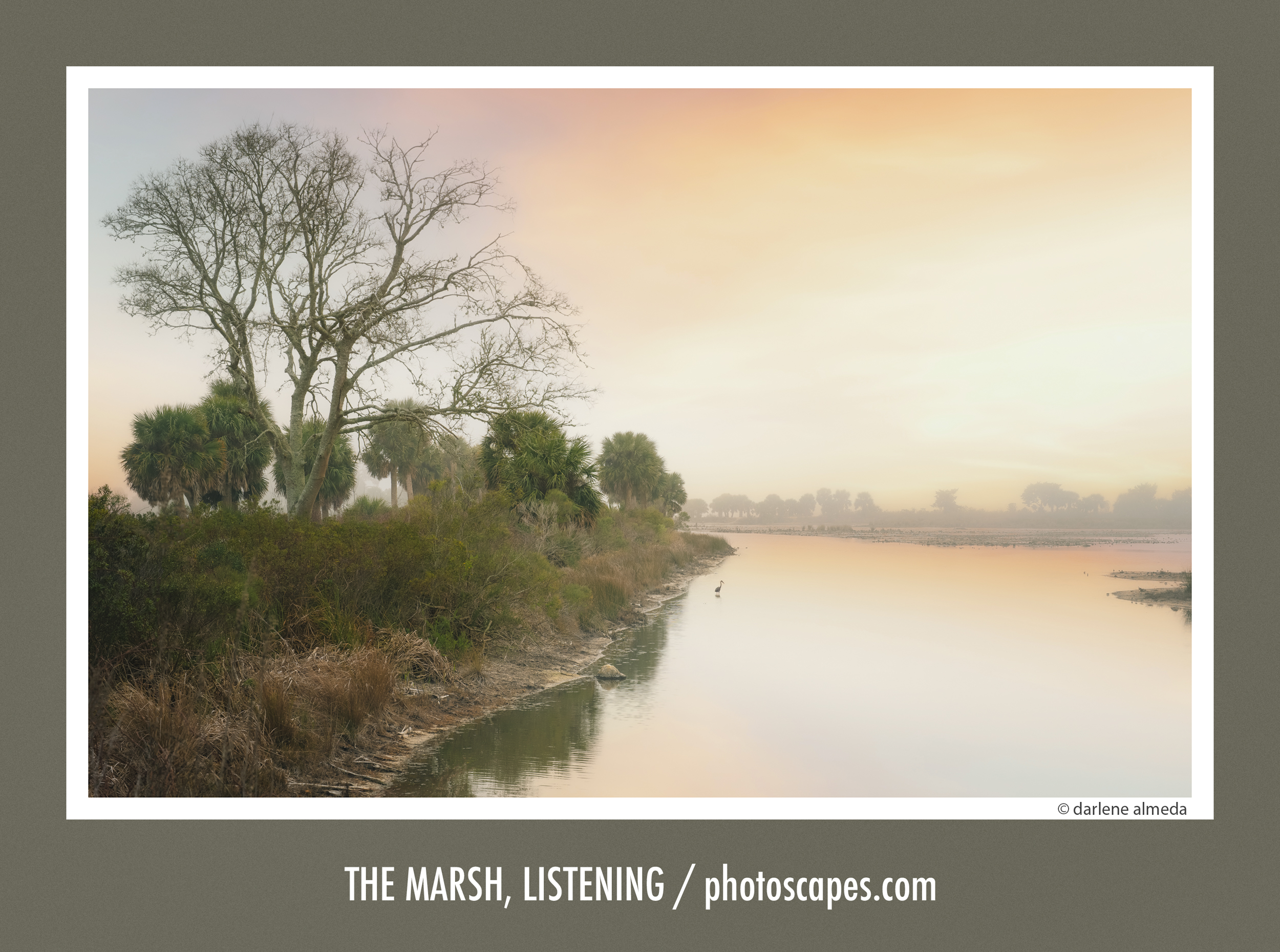
The Marsh, Listening
Morning atmosphere and the quiet transformation of a familiar landscape.
In The Marsh, Listening, the impressionistic qualities come primarily from the natural atmosphere.
Morning mist softens the distant trees, allowing their forms to gradually disappear into the landscape. Delicate pastel colors spread across the sky and reflect in the still water, creating a quiet relationship between the land, water, and light.
The trees and vegetation in the foreground provide enough definition to establish a sense of place, while the distant landscape becomes increasingly indistinct.
Rather than emphasizing the individual details of the marsh, the photograph communicates the sensation of being present during a quiet, misty morning.
It is also an example of how photographic styles and aesthetic descriptors can overlap. The image has both impressionistic and ethereal qualities, with its interpretation shaped by the delicate atmosphere of the scene.
Life Is a Miracle
An impressionistic floral study using selective focus and expressive color.
Life Is a Miracle was photographed with a Fujifilm X Pro2 and a Lensbaby Sweet 50 lens combined with two macro extension tubes.
The Lensbaby Sweet 50 produces a distinctive area of sharp focus surrounded by progressively softer detail. At close focusing distances, this characteristic becomes particularly expressive, allowing small elements of a flower to emerge from surrounding areas of softness and color.
For this photograph, I explored the flower through the viewfinder, moving the camera gently forward and backward until the relationship between the delicate stamens, surrounding petals, and areas of selective focus felt right.
The composition was established entirely in camera, using the full APS C frame without cropping.
During processing, I emphasized the colors to strengthen the luminous, painterly qualities of the original photograph. However, the selective focus, optical softness, and composition were all established during the photographic process.
This image illustrates something I particularly enjoy about impressionistic photography: the ability to create an expressive interpretation through the optical characteristics of a lens and the simple act of exploring a subject.
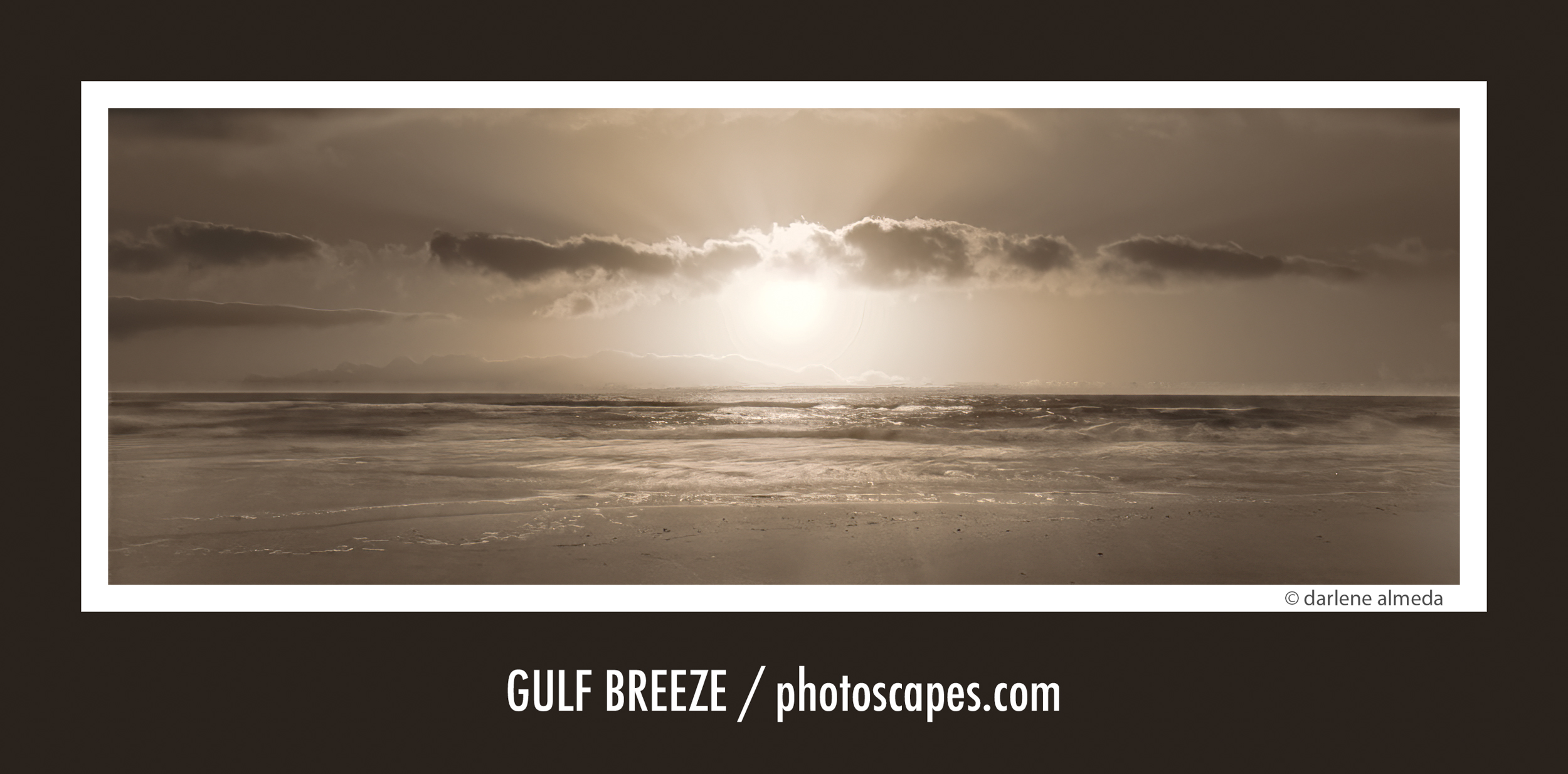
Gulf Breeze
A pinhole interpretation of coastal light and atmosphere.
Gulf Breeze was photographed using a Harman Titan 4×5 pinhole camera, with the original image subsequently cropped to a panoramic 6×17 aspect ratio.
Unlike conventional lenses, a pinhole camera forms an image through a tiny opening rather than glass optical elements. The resulting image has a distinctive softness, with gentle transitions between forms and an absence of the sharply defined detail associated with modern photographic lenses.
In Gulf Breeze, these characteristics contribute to the impressionistic interpretation of the coastal scene. The glowing sky, distant horizon, and softly rendered water become broad relationships of light and tone rather than collections of individual details.
The restrained sepia palette further emphasizes the atmosphere, while the panoramic composition directs attention across the horizon and the reflected sunlight.
What I particularly enjoy about this photograph is that its impressionistic character was established largely through the choice of camera. The pinhole’s optical softness becomes part of the visual interpretation, rather than an effect introduced afterward.
This photograph also illustrates that impressionistic photography can be approached through remarkably different photographic methods. While Life Is a Miracle uses selective focus and the optical characteristics of a Lensbaby lens, Gulf Breeze uses the inherent softness of pinhole photography to communicate an impression of coastal light and atmosphere.
Both approaches place visual expression above the precise rendering of detail.
Impressionistic Photography Is More Than Soft Focus
One misconception about impressionistic photography is that an image becomes impressionistic simply because it is soft or intentionally blurred.
Softness can be an effective expressive tool, but it does not automatically create an impressionistic photograph.
What matters is how the visual elements work together to communicate an impression.
A photograph may be exceptionally sharp in selected areas while still conveying an impressionistic feeling through its color, light, and composition. Conversely, a completely blurred photograph may communicate very little if its visual relationships lack intention.
For me, selective focus is a means of directing attention rather than an end in itself. I want the viewer to discover the same relationships that interested me when I made the photograph.
The purpose is not to eliminate detail simply for the sake of softness, but to determine which details contribute to the visual experience and which can be allowed to recede.
Finding Impressionism in Everyday Subjects
Impressionistic photography can be explored through almost any photographic genre.
Flowers, landscapes, water, reflections, architecture, and even ordinary household objects can become subjects for expressive interpretation.
Changing light can transform a familiar landscape. A close view of a flower can reveal unexpected relationships between color and form. Reflections can dissolve recognizable objects into abstract arrangements, while atmospheric conditions can soften the boundaries between subjects and their surroundings.
The possibilities are not limited by equipment or location.
What matters most is the photographer’s willingness to observe, experiment, and interpret.
Final Thoughts
Impressionistic photography reminds me that a photograph does not need to describe everything within the frame to communicate something meaningful.
Sometimes a small area of focus, a delicate transition of color, or a fleeting moment of illumination can express more than an image filled with carefully rendered detail.
My enjoyment of this style comes from the freedom to explore a subject without knowing precisely what the final photograph will become.
Whether I am moving gently around a flower with my camera or watching the morning mist settle over a Florida marsh, I am looking for those moments when light, color, and atmosphere come together in a way that feels worth remembering.
For me, impressionistic photography is not about making a photograph look like a painting.
It is about allowing the photograph to express the experience of seeing.
words & images © darlene c. almeda / photoscapes.com